Stargazing in Vaucluse: 4 Dark-Sky Spots Worth the Drive
Leave Avignon’s streetlights behind and Provence changes character. These four easy-going stargazing ideas—from Mont Ventoux to the Lure plateau—help you plan a quieter evening under the stars, without pretending every night will be perfect.
The moment Provence goes quiet
There is a particular kind of Provence evening that does not fit neatly into a daytime itinerary. The market bags have been unpacked, the terraces are thinning out, and the heat finally starts to leave the stone. If you get beyond the strongest lights, look up, and give your eyes a few minutes, the region becomes a completely different place.
Stargazing here is not about turning yourself into an astronomer overnight. It is about making room for one slow evening: a short drive, a warm jumper, a thermos if you fancy it, and the very sensible acceptance that clouds may win. On a good night, though, the reward is immediate. You notice more stars than you expected, the familiar shapes of the sky begin to appear, and the noise of the day drops away.
Avignon is brilliant for dinner, history and the Festival, but its city glow is not ideal for a dark-sky evening. That is no criticism; it is simply a reason to make the surrounding landscape part of your stay. If you are already planning a quieter break, our guide to visiting Provence outside the busiest season is a useful companion: darker evenings arrive earlier, and the roads feel less rushed.
Here are four realistic ideas for a night under the stars. Think of them as starting points rather than guaranteed performances. The sky, the wind and the moon have the final say.
1. Mont Ventoux: big horizons, proper mountain weather
Mont Ventoux is the obvious name, and for good reason. Its high, open landscape can make the sky feel enormous. Away from the brightest built-up areas, the horizon opens out and the sense of distance is part of the experience. On a clear evening, that alone is worth the journey.
The important bit is not to treat Ventoux casually. Conditions can change quickly, and a pleasant evening down in the valley can feel seriously cold and windy higher up. Check the weather before leaving, take extra layers, and make sure you are comfortable with the route in the dark. If the forecast looks unsettled, save Ventoux for another night rather than forcing it.
You do not need specialist kit. Let your eyes adapt for around 20 minutes, keep your phone screen dim, and avoid repeatedly switching on a bright torch. A basic sky-map app is enough to identify a few constellations or find a bright planet. Then put the phone away again. The point is not to tick off celestial objects; it is to be outside long enough to notice the sky properly.
Ventoux works best for travellers happy to make an evening of it. Eat first, leave with time to spare, and do not build the plan around a late return followed by an early start. If you are travelling with children, set expectations low and bring snacks. Ten memorable minutes can be better than an hour of everyone getting chilly.
2. The Sault plateau: lavender country after the crowds
Sault is often associated with lavender in summer, but its appeal does not disappear when the fields are no longer the headline. The plateau’s more open, rural setting makes it a strong choice when you want to get away from the strongest urban light. It is also a nice reminder that Provence is not just villages, cafés and postcard viewpoints.
The best approach is uncomplicated: choose a clear forecast, go on a night when the Moon is not too bright, and find a safe, legal place to stop well away from traffic. Do not wander onto farmland, block an access road or assume every quiet-looking track is public. A roadside pull-in may be convenient, but only if it is genuinely safe and you are not dazzling passing drivers.
This is a good location for people who want the feeling of a night outing without needing a technical programme. Sit back, identify the brightest stars, look for satellites moving steadily across the sky, and see whether the Milky Way is visible as a pale band when conditions are especially dark. If you cannot see much beyond the brightest stars, that is not a failed trip. The Moon, clouds, haze and nearby lights all change the view.
Pair the outing with a leisurely day in the Luberon or a seasonal countryside drive rather than trying to squeeze it between two major sights. Provence rewards that slower rhythm. You will enjoy the evening more if you have already accepted that the destination is the atmosphere, not a perfect photograph.
3. Montagne de Lure: a quieter neighbour to Ventoux
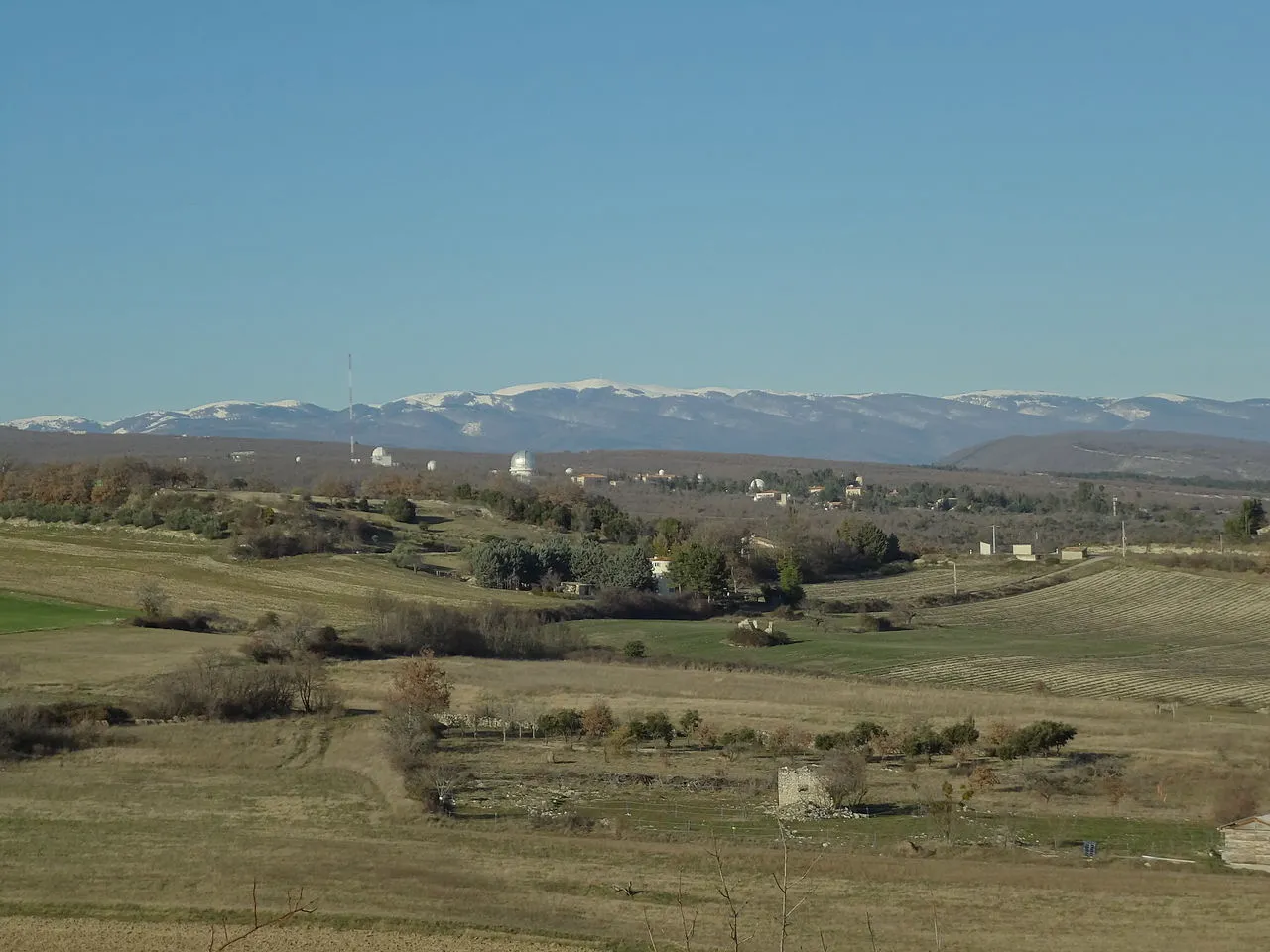
The Montagne de Lure area is often mentioned alongside Haute-Provence’s astronomical landscape, and it has the sort of darkness that makes you instinctively lower your voice. It is less of a default name than Ventoux, which can be exactly the point if you are looking for a quieter, more off-the-beaten-track evening.
As with any rural night drive, preparation matters more than bravado. Download directions before you leave if your signal may be patchy, keep fuel in the car, and tell someone where you are going if you are travelling separately. Bring water and warm clothes even during a warm spell. Once the sun has gone down, open ground can cool much faster than you expect.
The nearby Observatory of Haute-Provence gives this part of the region an obvious astronomical connection, but do not assume you can simply turn up for access or a visit. Check official opening arrangements separately and respect any restrictions. A public stargazing trip does not require an observatory gate, anyway. A dark place, a clear view and patience are enough.
This is the sort of evening that suits couples, friends and solo travellers who are comfortable with a little extra driving. Keep it modest. Choose one safe stopping point, stay for as long as the conditions are pleasant, and head back before tiredness becomes the main feature of the night.
4. The Luberon edges: make a gentle night of it
You do not always need to chase the darkest possible patch on the map. On the quieter edges of the Luberon, even a modest distance from larger towns can make the night feel noticeably different from central Avignon. This option is especially good if you want to combine an evening meal, a sunset walk and a short stretch of sky-watching rather than commit to a long mountain drive.
The key is managing expectations. You may still see some glow on the horizon, and you may not get the deep darkness of a higher or more remote location. But that can be part of the charm: settle somewhere safe, watch the colours fade, and let the first stars arrive one by one. A sky does not need to be flawless to feel special.
If your trip is centred on Avignon, start with the city’s daytime highlights, then deliberately make space for this quieter contrast. A visit to the Île de la Barthelasse, for example, is a reminder that green, open landscapes sit surprisingly close to the historic centre. For true stargazing, continue farther from the city lights, but use that same idea: slow down rather than trying to consume every sight before sunset.
Do not use flash photography around other people, and do not let a photo hunt ruin the view. Long-exposure night shots can be lovely, but they take time, stable equipment and dark-adapted eyes. If you have never tried them, take a few casual pictures and then leave the camera alone. Your own view will be better than a rushed attempt to recreate somebody else’s image.
A simple checklist for a better night
Before you set off, check three things: cloud cover, wind and the Moon. A clear sky is the obvious requirement, but a very bright Moon can make fainter stars harder to see, while strong wind can make an exposed viewpoint unpleasant. If any one of those looks unpromising, swap the stargazing plan for an unhurried dinner or a walk and try again another evening.
Pack more warmth than you think you need. A light jacket that was perfect at sunset may not be enough an hour later. Closed shoes, water, a small torch, a charged phone and something to sit on are practical basics. If you use a torch, point it down and keep it low; bright light resets your night vision quickly.
Finally, make safety part of the pleasure. Stay on public, permitted ground, do not climb over barriers, avoid isolated roadside stops that feel unsafe, and drive back rested. The best stargazing story is not the one where you found the darkest field at midnight; it is the one where everyone got home comfortably and still remembers looking up.
For an Avignon base before your night out, Damien and Lubna host three apartments in the Quartier des Teinturiers: Lavande Évasion, Lavande Dorée and Cinéma Provence. You can check availability and book your stay when your Provence plans start taking shape.
About this article
When is the best time to go stargazing in Vaucluse?
Aim for a clear evening close to the new moon, when moonlight will not wash out fainter stars. Summer is comfortable for staying outdoors, while autumn and winter can bring sharper skies but much colder conditions. Check the forecast on the day and keep your plan flexible.
Can you see stars from Avignon?
You can spot the Moon, brighter planets and the main constellations from Avignon, but city lighting limits the view of the Milky Way and faint objects. For a more striking sky, drive out of the built-up area and give your eyes time to adjust to the dark.
Do I need a telescope for stargazing?
No. Your eyes are the best starting point, especially once they have adapted to darkness for about 20 minutes. Binoculars can be fun for the Moon and bright clusters, but a warm layer, a torch with a red-light setting and a sky map app are more useful for a first outing.
Is Mont Ventoux a good place for stargazing?
Mont Ventoux can offer broad horizons and much darker surroundings than the city, especially when conditions are calm and clear. It is exposed, though, so temperatures and wind can change quickly; treat it as a mountain outing, not a late-night detour in light clothes.
What should I bring for a stargazing evening in Provence?
Bring warm layers, closed shoes, water, a fully charged phone, a small torch and something comfortable to sit or lie on. Avoid bright white lights once you arrive, park safely and do not set up on private land or beside a road.