Luberon Antique Markets: 4 Places to Hunt for Old Furniture
A good Luberon antique-market day is less about finding a perfect shopping list and more about following your eye. Here are four places to browse old furniture, brocante pieces and wonderfully impractical treasures, plus a few calm rules for buying well.
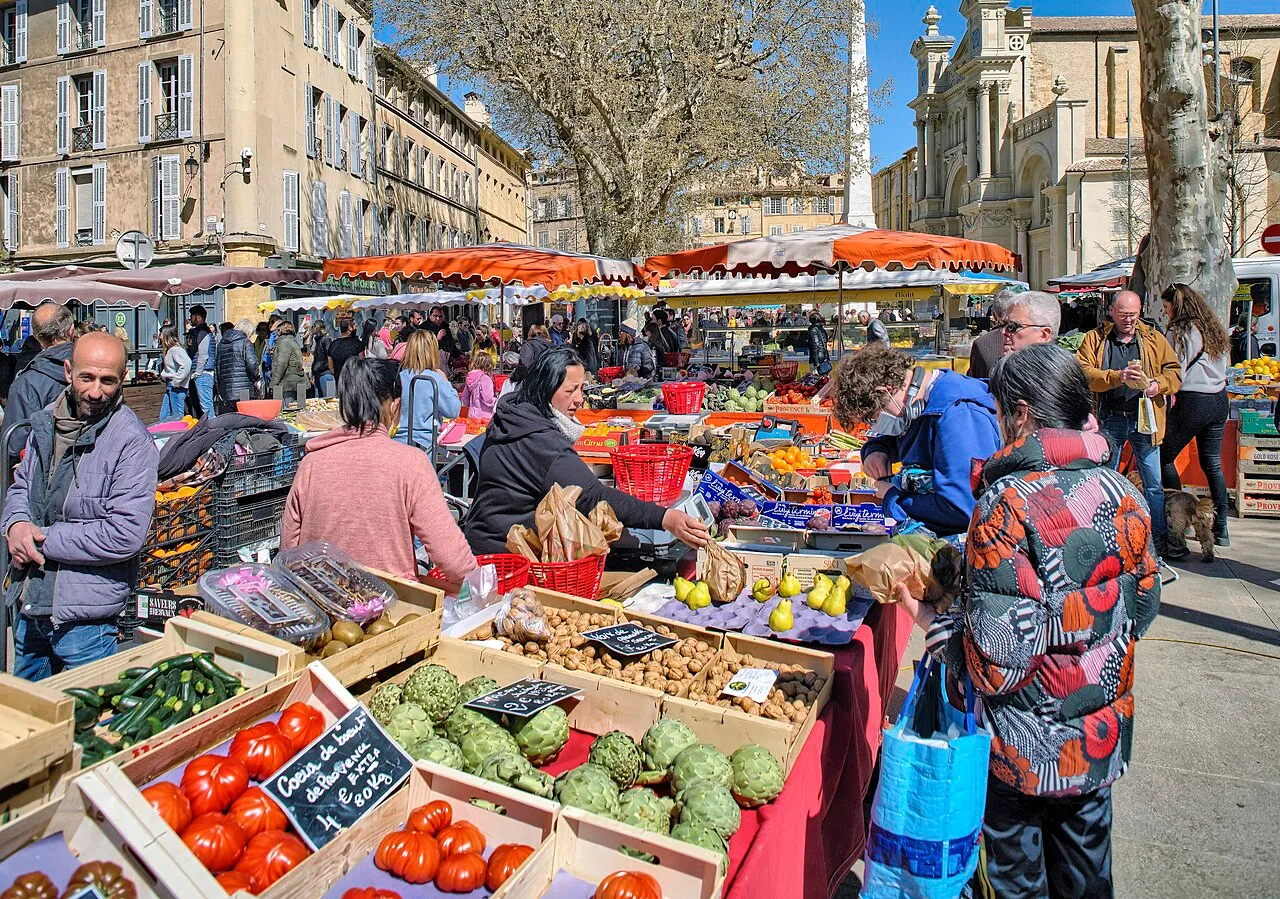
The first thing to know about antique hunting in the Luberon is that it can ruin ordinary shopping for you. After an hour spent opening the drawers of a battered walnut commode, checking the back of an old mirror, and wondering who once used a pile of linen napkins, a perfectly tidy chain shop can feel oddly silent.
That is the pleasure of it. You are not touring a museum with labels and ropes. You are moving through objects that have survived kitchens, farms, hotels, family homes and decades of being moved from one room to another. Some pieces will be beautiful. Some will be expensive. Some will be gloriously strange. The best days leave you with a story even if you return empty-handed.
If old furniture is on your wish list, treat the area as a loose network rather than one giant market. Here are four worthwhile ways to explore, from the major antique hub to smaller, slower discoveries.
1. Begin at L’Isle-sur-la-Sorgue
L’Isle-sur-la-Sorgue is the obvious first stop, and for good reason. It is widely known for antiques and brocante, so it gives you something that smaller village markets cannot always offer: comparison. You can look at several cupboards, mirrors, chairs, paintings, tableware or textiles in one visit and start to see the differences between a genuinely appealing old piece and something merely styled to look old.
Go without trying to force a film-set version of Provence. The useful part is the variety. One dealer may have formal furniture, another may focus on kitchenware, printed paper, tools or decorative objects. You may be looking for an early-1900s chair and instead find a simple stoneware bowl that fits in your luggage. That is not a failure; it is exactly how brocante days work.
Give yourself enough time to walk, pause and circle back. The piece you dismissed at the start may look better after you have seen twenty others. If you are new to the town, our guide to antiques in L’Isle-sur-la-Sorgue is a helpful companion for planning the wider visit.
2. Let village brocantes do the surprising work
The Luberon’s smaller towns and villages can be where the most personal finds appear. A modest brocante, a seasonal sale, a dealer’s display or a market with a few second-hand stalls may not offer endless choice, but it can offer the best kind of discovery: an object you did not know you wanted.
This is where expectations matter. Do not expect every village market to be a destination for serious furniture buying. Think of it instead as a chance to browse at human speed. Notice old baskets, painted boxes, brass hardware, kitchen scales, framed photographs, earthenware and small tables. These are often easier to carry, easier to live with and more realistic than trying to take home a massive armoire on a holiday.
Village browsing also works well when combined with an ordinary market morning. Fresh produce, coffee, a walk through old streets and a few second-hand stalls make a very good day, even if you do not purchase anything. For ideas beyond antiques, see our overview of Provençal markets around Avignon.
3. Look beyond the word “antique”
Not every worthwhile old piece will be presented as an antique, and not every item labelled antique deserves the price. In Provence, the word brocante is often more useful for travellers because it suggests a broader, less formal world of previously loved things: furniture, tools, glassware, posters, books, ceramics and household objects.
That wider view is useful if you are drawn to furniture from around 1900. You may find solid, practical pieces with later repairs, altered handles or worn finishes. Those details are not automatically problems. A repair can be evidence of a useful life. A faded surface can be far more appealing than an aggressively polished one. The key is to decide whether you like the object as it is, rather than imagining a complicated restoration once you are home.
Turn every larger item around if the seller permits. Check the back, underside and inside. Open drawers. Look at joints and feet. Small holes, loose construction, new-looking parts or a strong smell are all reasons to slow down and ask questions. You do not need to become an expert in a morning; you just need to avoid buying in a rush.
4. Make Avignon part of the hunt
Avignon is a practical base for antique browsing because it lets you pair a market-minded day with museums, cafés and the atmosphere of a lived-in city. It is also sensible when your finds are small enough to carry and you want to avoid moving accommodation every night.
A stay in the Quartier des Teinturiers puts you in one of Avignon’s characterful areas, with the city available before or after a day trip towards the Luberon. Damien and Lubna host three apartments there: Lavande Évasion with one bedroom, Lavande Dorée with two bedrooms, and Cinéma Provence, a one-bedroom loft with a private cinema setup. You can view the Avignon apartments when choosing a base for your market weekend.
The city is also good for resetting your eye. After several hours looking at old wood and faded fabric, take a break and walk a different kind of historic setting. Our Rue des Teinturiers guide is a simple starting point for that slower Avignon moment.
How to buy without turning the day into a stress test
Set a rough budget before you leave, but keep it flexible enough for a genuinely special find. It helps to split that budget in two: one amount for a piece you actively need, and a smaller amount for a purely emotional purchase. That way, the odd ceramic dog or tiny painted stool does not somehow become a regrettable financial event.
For furniture, ask direct practical questions before discussing price. Can it be collected today? Can it be held? Is there a known repair? Has it been treated recently? Is a delivery or transport option available? The answers matter more than winning a small negotiation. Sellers have different ways of working, so do not assume every stall can pack, store or ship an item.
Photos help, especially if you are buying for a particular room. Photograph the item from several angles, then take one photo with a familiar object beside it for scale if appropriate. Measure where possible. A bench that looks compact outdoors can be very large once it reaches a narrow hallway.
And leave room for the possibility that the right purchase is no purchase. The best antique-market habit is patience. Take notes, remember the stall, have lunch, and return if the object still feels right. If someone else buys it first, it was not your piece. Another market, another village and another improbable treasure will come along.
A gentler way to bring Provence home
The most convincing souvenirs are rarely the most polished ones. A small worn object that you chose slowly can bring back the sound of market chatter, the heat on the pavement and the pleasure of getting slightly lost between stalls. Whether you come home with furniture, a framed print or simply a head full of ideas, antique hunting gives the Luberon a more tactile side.
Build your day around browsing rather than conquest, and let the objects set the pace. If you are planning an Avignon base for market days and Luberon detours, have a look at available stays and make time for one unplanned stop along the way.
About this article
Where is the best place near the Luberon for antique furniture?
L’Isle-sur-la-Sorgue is the best-known starting point, thanks to its concentration of antique and brocante sellers. It is especially useful if you want to compare styles, conditions and prices in one outing rather than relying on a single stall.
Can I buy large furniture at a Provençal antique market?
You can, but first establish how the item will travel. Ask the seller whether collection is required, whether they know a transporter, and whether the piece can be held. Measure your own vehicle and home access before falling in love with a cupboard or table.
Are prices fixed at brocantes in Provence?
Not always. A polite conversation may be welcome, particularly when you are buying more than one item or when an object has visible condition issues. Keep the tone friendly, know your limit, and be prepared to walk away without making it awkward.
What should I inspect before buying old furniture?
Look for signs of woodworm, wobbling joints, cracks, missing elements, altered surfaces and drawers that do not run properly. Wear, repairs and patina can be part of the charm; the point is to understand what you are paying for rather than expecting a new object.
When should I visit an antique market around the Luberon?
Market schedules, specialist fairs and dealer opening times can change with the season, so check locally shortly before travelling. Earlier in the day is generally calmer for browsing, while later visits can suit people who prefer to take their time over one or two considered purchases.