Cucuron: The Village with the Stone Basin That Steals Hearts
Tucked into the southern slopes of the Luberon, Cucuron feels like a village someone forgot to modernize—and we're all better for it. Its massive stone basin, shadowed by plane trees and ringed by cafés, is the beating heart of a place where Tuesday markets still matter and time moves at a kinder pace.
Why Cucuron Deserves a Spot on Your Luberon Itinerary
Let’s be honest: Provence is crowded with postcard villages, each claiming to be more authentic than the last. Gordes clings to its clifftop with Hollywood confidence, Roussillon flaunts its ochre cliffs, and Isle-sur-la-Sorgue lures antique hunters by the busload. Cucuron doesn’t compete on that stage—and that’s precisely why it works.
Tucked into the southern folds of the Luberon, Cucuron feels like someone pressed pause around 1950 and forgot to hit play again. The massive stone basin at the village center isn’t just a landmark; it’s the living room, the meeting point, the reason everyone ends up sitting at the same café table by 11 a.m. on a Tuesday. Plane trees arch overhead like a natural cathedral. The market unfurls around the water’s edge. And if you squint just right, you can almost see Russell Crowe popping out of a fountain—because yes, this is where they filmed that scene in A Good Year.
But Cucuron isn’t trading on movie nostalgia or Instagram angles. It’s trading on something older and harder to fake: the rhythm of village life that still actually happens here. If you’re staying in Avignon at our Quartier des Teinturiers apartments, Cucuron makes for an easy hour’s drive into a completely different Provence—one where the loudest sound is the splash of water into an 18th-century basin.
The Basin: Cucuron’s Monumental Living Room
Let’s start with the obvious: the bassin is why you’re here. Built in the early 1700s to capture water from underground springs, this rectangular stone pool measures around 42 meters long and anchors the village square like a liquid monument. For centuries, it quenched livestock, washed laundry, and kept the village alive through hot summers. Today it’s mostly ornamental, but it’s lost none of its gravitational pull.
Four tall plane trees frame the basin, their trunks thick as small cars, their branches casting dappled shade across the cobblestones. In spring and summer, the trees form a continuous canopy; in winter, their bare limbs sketch elegant patterns against the sky. The water itself is shallow and clear, fed by a centuries-old canal system that still trickles in from the hills.
What makes the basin special isn’t the engineering—it’s the life that’s grown around it. Café chairs cluster at the water’s edge, old men debate the day’s news from their permanent corner table, and kids chase each other around the perimeter while parents sip rosé and pretend to supervise. On Tuesday mornings, the weekly market sets up shop here, and suddenly the basin becomes the eye of a colorful, fragrant storm: cheese wheels, lavender bundles, roast chicken spinning on spits, and about seventeen different vendors selling olives.
If you’ve seen A Good Year, you’ll recognize the basin instantly—it’s where Max Skinner (Russell Crowe) gets dunked during the village festival. The movie put Cucuron on the tourism map, and while the village hasn’t exactly resisted the attention, it also hasn’t bent over backward to capitalize on it. There’s no “A Good Year Café” or branded merch shop. The basin is still just the basin, doing what it’s done for three hundred years: holding water and anchoring a village.
The Village Itself: Wandering Cucuron’s Stone Veins
Once you’ve paid your respects to the basin, let your feet do the thinking. Cucuron’s old quarter is a tight maze of narrow lanes, weathered stone houses, and the kind of architectural details that only reveal themselves when you slow down: a carved lintel from the 1600s, a tiny niche shrine to the Virgin Mary, a doorway so low you’d have to duck if people still rode horses through it.
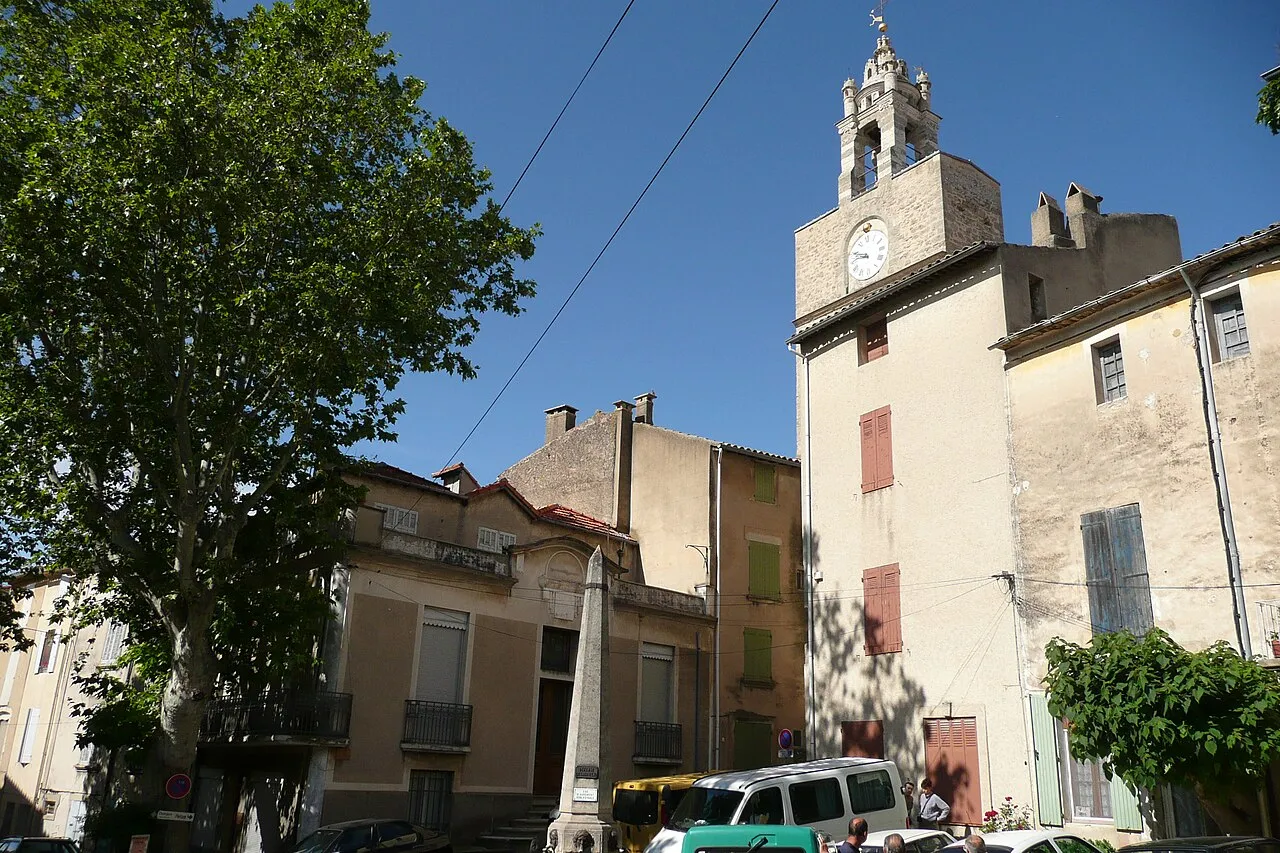
The 14th-century bell tower (beffroi) rises above the village like a stone exclamation point. You can’t climb it, but you can admire its medieval bulk and imagine the generations of villagers who’ve used it to tell time. Nearby, the Église Notre-Dame de Beaulieu is worth a quick step inside—cool, dim, and almost always empty except for the scent of old stone and candle wax.
Cucuron isn’t a museum village. People actually live here year-round, which means you’ll spot laundry hanging from wrought-iron balconies, hear someone yelling down from a window, and occasionally get stuck behind a delivery van on a street built for donkeys. That’s part of the charm—this isn’t a stage set. It’s a real place that happens to be beautiful.
If you’re into archaeology or local history, the Musée Marc Deydier offers a small but surprisingly rich collection: Roman pottery shards, medieval tools, folk costumes, and a recreation of a traditional Provençal interior. It won’t take more than an hour, but it adds context to the stones you’ve been walking on.
The Étang de Cucuron: A Walk Up the Hill
Just above the village, maybe a fifteen-minute walk up a gentle incline, sits the Étang de Cucuron—a small natural lake surrounded by reeds, oaks, and birdlife. It’s a protected nature reserve, and on a quiet morning you might spot herons, ducks, or the occasional wild boar rooting around the edges.
The lake isn’t dramatic—no alpine vistas here—but it’s peaceful in a way that feels earned. Locals come up to walk the family dog, jog the perimeter trail, or spread a picnic blanket under the trees. In summer, you’ll see people cooling off their feet at the water’s edge, and while swimming isn’t officially encouraged (protected habitat and all), nobody’s going to chase you off for wading in on a hot afternoon.
There’s a small parking area if you’d rather drive up, but the walk from the village is part of the appeal. The trail climbs gently past vineyards and old stone walls, offering long views south toward the Durance valley. Bring water, a hat, and maybe a baguette.
Tuesday Market: Cucuron at Full Volume
If you only visit Cucuron once, make it a Tuesday morning. The weekly market has been running for centuries, and while it’s smaller than the famous markets in Isle-sur-la-Sorgue or Apt, it’s also more intimate and less touristy.
Stalls ring the basin and spill into the surrounding streets: farmers selling apricots, melons, and tomatoes still warm from the field; bakers with olive fougasse and almond croissants; cheese vendors offering thick wedges of aged tomme and fresh chèvre; roast chicken vendors whose rotisseries perfume half the village; and the usual assortment of soap-makers, honey producers, and people selling lavender in every imaginable form.
The vibe is decidedly local. You’ll hear plenty of Provençal French, watch regulars greet each other by name, and witness the kind of prolonged negotiations over cheese that only happen when people aren’t in a hurry. Arrive by 9 a.m. if you want first pick of the produce; by 11 a.m. the market is winding down and everyone’s migrating to the café tables for a pastis.
Bring cash—some vendors take cards, but many don’t. And bring a shopping bag unless you enjoy juggling melons.
Eating and Drinking: Where to Sit Down
Cucuron isn’t a culinary destination in the same league as Avignon or even nearby Lourmarin, but it holds its own for a village of this size. A few bistros and cafés cluster around the basin, and in summer their terraces are the best seats in town.
Expect simple, seasonal Provençal fare: ratatouille, goat cheese salads, grilled lamb, tapenade, and whatever vegetables are shouting loudest at the morning market. Prices are reasonable compared to more tourist-heavy villages. Reservations are wise on market days and summer weekends, especially if you want a table by the water.
For a coffee or a glass of something cold, the cafés by the basin are interchangeable—pick whichever has shade and a free chair. In the early evening, locals gather here for the apéro hour, and it’s worth joining them if only to watch the light go golden on the stone and the plane trees.
If Cucuron’s options feel limited, Lourmarin is a ten-minute drive away and has a deeper restaurant bench, including a couple of spots with Michelin aspirations. But honestly, part of Cucuron’s appeal is its lack of pretension—you’re here to sit by a basin under a tree, not to chase stars.
Practical Notes: Getting There and Getting Around
Cucuron sits about 60 kilometers east of Avignon, an hour’s drive via Cavaillon on the D973 and then south toward Lourmarin. The route is scenic—vineyards, orchards, and Luberon ridgelines—so don’t rush it. If you’re based at our Avignon apartments in the Quartier des Teinturiers, Cucuron makes an easy half-day or full-day excursion, especially if you pair it with nearby Lourmarin or Ansouis.
There’s no train to Cucuron, and bus service is minimal, so you’ll need a car. Parking is straightforward: there’s a free lot just off the main square, a two-minute walk from the basin. In summer and on market days, it can fill up by mid-morning, so arrive early or park on the outskirts and walk in.
The village itself is small enough to cover on foot in under an hour, though you’ll want to linger longer if the market’s on or if you’re doing the lake walk. Bring comfortable shoes—cobblestones and uneven pavement are the norm.
Summer can be hot, so carry water and wear sun protection. Spring and autumn are ideal: warm enough for outdoor sitting, cool enough for walking, and less crowded than high summer. Even winter has its appeal—the village empties out, a few restaurants close, but the basin and the plane trees remain, stripped down to their essential bones.
Why Cucuron Works
Cucuron doesn’t try to be anything other than itself. It’s not chasing Gordes for drama, not competing with Gordes for clifftop theatrics, not hawking lavender keychains on every corner. It’s a working village that happens to be beautiful, and that unpretentious authenticity is increasingly rare in Provence.
The basin is the anchor, but the real draw is the atmosphere—the sense that life here still follows rhythms older than tourism. Market day still matters. The café tables still fill with locals arguing about nothing in particular. The plane trees still shade the same stones they’ve shaded for generations.
If you’re craving that slower, quieter Provence—the one that exists between the Instagram hotspots—Cucuron is an easy yes. Spend a morning at the market, walk up to the lake, sit by the basin with a coffee and watch the village do its thing. That’s the whole itinerary, and it’s enough.
About this article
What is the Cucuron basin and why is it famous?
The Cucuron basin is a massive rectangular stone water basin built in the early 18th century, measuring around 42 meters long. It served as the village's main water source for centuries and became internationally famous after appearing in the 2006 film A Good Year with Russell Crowe. Today it's the village's living room—surrounded by century-old plane trees, outdoor café tables, and the Tuesday morning market.
When is the best time to visit Cucuron?
Tuesday mornings are magic—the weekly market fills the streets around the basin with local produce, flowers, crafts, and about a hundred reasons to slow down. Late spring through early summer (May to July) brings lavender fields nearby and perfect weather. Early autumn is equally lovely with harvest colors and fewer crowds. The village is quieter but still charming in winter, though some restaurants close seasonally.
How do I get to Cucuron from Avignon?
Cucuron sits about 60 kilometers east of Avignon, roughly an hour's drive via the D973 through Cavaillon and then south toward Lourmarin. There's no direct train service, so a car is your best bet. The drive itself is scenic, winding through vineyards and orchards. You can easily combine Cucuron with visits to nearby Lourmarin or Ansouis for a full Luberon day.
What else is there to do in Cucuron besides see the basin?
Wander the old village streets to spot ancient doorways, weathered stone fountains, and the 14th-century bell tower. Climb up to the Étang de Cucuron, a small lake and nature reserve just above the village—great for a picnic or an easy walk. Visit the Musée Marc Deydier for local archaeology and folk history. In summer, open-air cinema screenings sometimes happen by the basin. And the surrounding countryside offers hiking trails with sweeping Luberon views.
Are there good restaurants or cafés in Cucuron?
For such a small village, Cucuron punches above its weight. There are a handful of bistros and cafés around the basin itself—perfect for a coffee or a casual lunch under the plane trees. A couple of more refined spots offer seasonal Provençal menus. Reservations are smart on market days and summer weekends. Nearby Lourmarin (just 10 minutes away) has additional dining options if you want more variety.
Can I swim in the Cucuron basin?
No, the basin is a historic monument and the village's symbolic centerpiece, not a swimming pool. But if you're craving water, head to the Étang de Cucuron (the lake above the village)—it's a protected nature area, so swimming isn't officially encouraged, but it's a lovely spot to cool off your feet on a hot day. For proper swimming, look for one of the public pools or natural rivers in the broader Luberon area.